
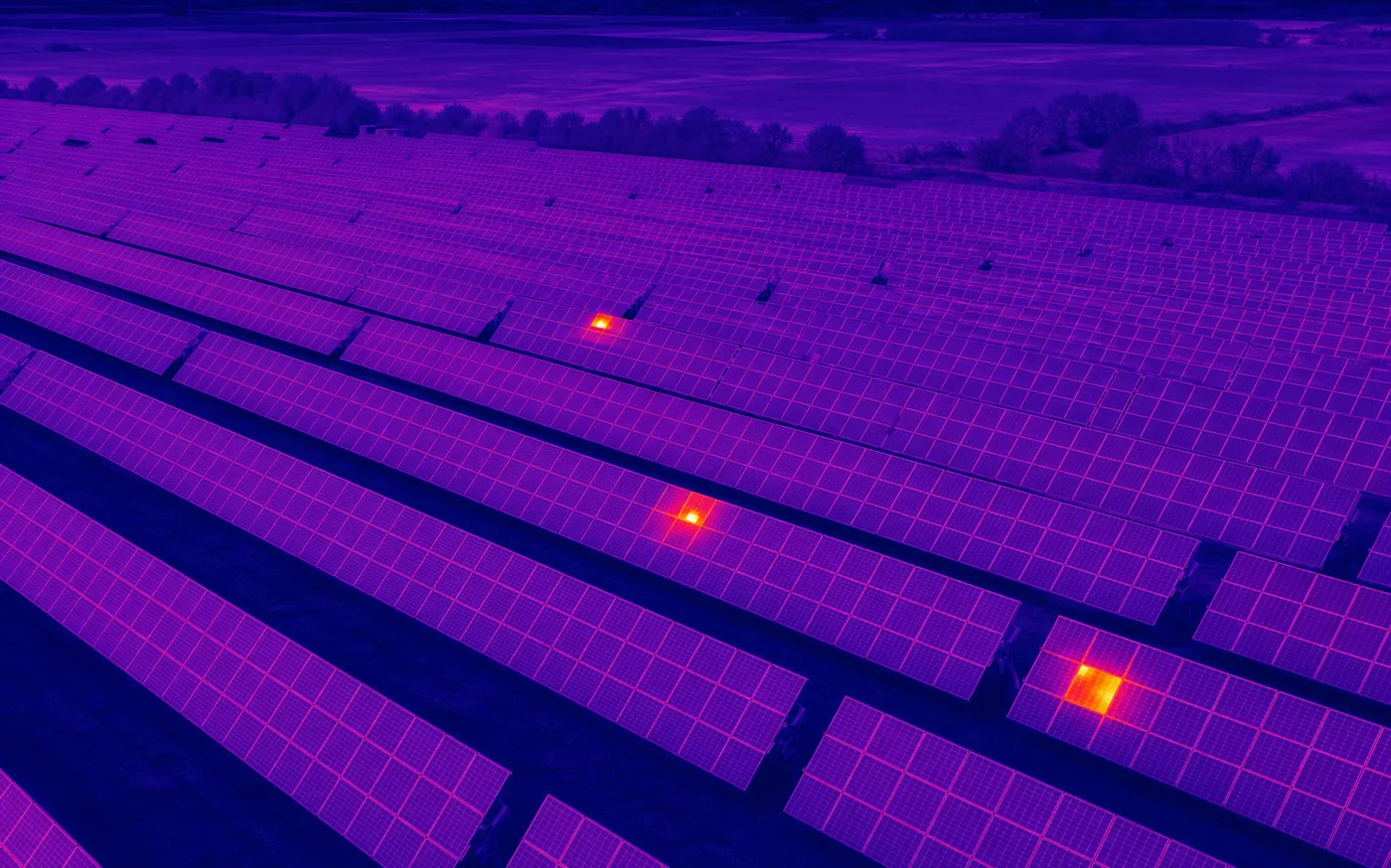
A thermal drone inspection can screen a large PV installation and organise modules or areas that deserve closer verification. It does not replace electrical measurements or diagnosis by qualified personnel. A reliable brief should describe the installation, the operational question and the output expected by the maintenance team.
1. Start with the maintenance question
State whether the goal is a commissioning check, periodic screening, investigation after a performance change, comparison after maintenance or documentation before a ground visit. One mission should have a clear decision it is intended to support.
Identify the people who will use the material. Asset managers, electrical contractors and service teams may need different numbering, location references and file formats.
2. Share the installation layout and operating context
Provide the exact location, approximate capacity or module count, mounting type, row or string layout and any available plan. Mention known shading, inactive sections, access restrictions and areas where people or vehicles are normally present.
Confirm who can provide access and operational information on the day. Thermal patterns are more useful when they can be related to the installation layout and its actual operating state.
3. Select conditions for comparable thermal data
Thermal capture depends on solar loading, clouds, wind, precipitation, reflections and whether the installation is operating. Rapidly changing conditions can make neighbouring images difficult to compare or make a mission unsuitable.
Give Aeronautiq a workable date range rather than a single rigid hour. The final capture window is confirmed after reviewing weather and site conditions, and may be moved when the expected data quality is poor.
4. Capture thermal and RGB context systematically
A repeatable flight pattern, overview imagery and visible-light context help relate a temperature pattern to a specific module or area. The flight plan must also account for obstacles, safe distances, airspace and access.
Aeronautiq records the observations, while the appropriate technical specialist determines their electrical significance. A visible temperature difference alone does not confirm a defect.
5. Agree an output the ground team can use
A useful package may contain paired thermal and RGB images, installation overviews, numbered observations, an anomaly register and a concise PDF summary. Agree the reference system before the flight so each observation can be found on site.
Define whether raw files, processed images or material for repeat comparisons are required. The agreed output should describe the method, findings and limitations without assigning a diagnosis that the imagery alone cannot support.